Source n-sma coaxial rf adapter cable for Antennas, Base Stations, and Communication Systems
Explore 30 available options for the n-sma coaxial rf adapter cable designed for local communication and base antenna applications. Buyers can compare specifications such as impedance, frequency range, and connector types from verified manufacturers in China.
Key considerations
Products List


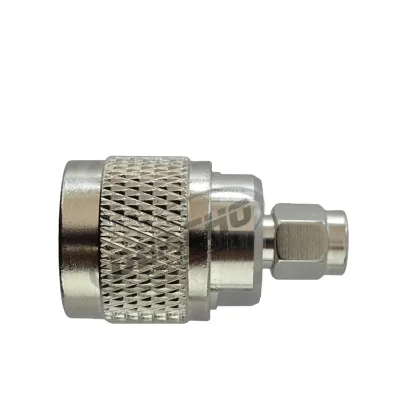


RF Coaxial N Male to SMA Male Connector Cable Assembly with Semi Steel 141 Cable
$0.13 - $1.31
MOQ: 1 Pieces


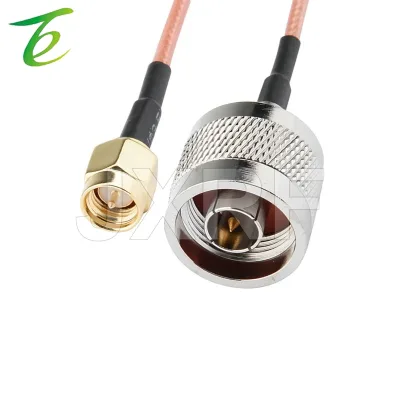
Comprehensive Sourcing Guide
Strategic Sourcing Guide for N-SMA Coaxial RF Adapter Cables
Navigating the global market for N-SMA coaxial RF adapter cables requires a disciplined approach that balances technical precision with rigorous supplier evaluation. For procurement professionals, the core keyword "n-sma coaxial rf adapter cable" represents a critical interface component used to bridge different connector standards in radio frequency systems. The availability of these components is widespread, with manufacturers primarily located in regions like China, specifically Shenzhen, offering a broad spectrum of customization options. Buyers must distinguish between generic observations and verified product attributes to ensure the selected components meet the specific operational demands of their projects.
Technical Specifications and Interface Compatibility
The fundamental requirement for any RF adapter cable is the seamless transition between connector types while maintaining signal integrity. In the context of N-SMA adapters, the interface typically involves converting the robust, threaded N-type connector to the smaller, snap-on SMA connector. The technical landscape for these components includes specific impedance requirements, which are critical for minimizing signal reflection. Observed data indicates that a standard impedance of 50 Ohm is a common specification for these cables, ensuring compatibility with most standard RF transmission lines.
The physical construction of the cable is equally vital. The conductor material often cited in product listings is bare copper wire, which provides excellent conductivity. The conductor type may be solid, offering structural rigidity, or the product may utilize round wire configurations. The insulation and outer jacket materials are also key differentiators; PVC is a frequently observed cover material, providing durability and flexibility. However, for applications requiring higher performance or environmental resistance, buyers should verify if alternative materials like aluminum alloy are utilized for shielding or structural components.
Signal performance metrics such as Voltage Standing Wave Ratio (VSWR) are essential indicators of quality. While some product observations list VSWR values ranging from 1.5 to 2, this range suggests that buyers must verify the specific VSWR tolerance for their application, as lower values generally indicate better performance. Additionally, the operating frequency range is a decisive factor. For many antenna and communication applications, the frequency range spans from 700MHz to 2700MHz, covering a broad spectrum of wireless communication needs. The cable length, observed in some listings as 220mm, is a variable that must be strictly defined in the purchase order to ensure proper fitment within the equipment enclosure.
Compliance, Certification, and Safety Standards
In the B2B procurement of electronic components, compliance is not merely a formality but a prerequisite for market access and operational safety. The supply chain for N-SMA coaxial RF cables is heavily influenced by international standards regarding hazardous substances and quality management. The most prevalent certifications observed in the market include RoHS (Restriction of Hazardous Substances) and ISO9001. These certifications indicate that the manufacturer adheres to strict guidelines regarding the elimination of lead and other harmful materials, as well as maintaining a consistent quality management system.
Some product listings also reference CE certification, which is crucial for products entering the European market. The presence of these certifications should be verified through official documentation rather than relying solely on product descriptions. The standard "RoHS&ISO9001" appears frequently as a combined standard, suggesting a dual focus on environmental compliance and manufacturing quality. Buyers must ensure that the specific batch of cables they procure carries the relevant certification marks, as these are often subject to change based on the production run.
Furthermore, environmental resilience is a key aspect of compliance for outdoor or industrial applications. Attributes such as an IP65 waterproof rating indicate that the connector or cable assembly is protected against dust and low-pressure water jets. This is particularly relevant for communication antennas and base station applications where exposure to the elements is a reality. The relative humidity tolerance, observed up to 95%, further defines the operational envelope of the component. Procurement teams should demand test reports or certification validity dates to confirm that the product meets these environmental standards at the time of delivery.
Cost Drivers and Pricing Dynamics
Understanding the cost structure of N-SMA coaxial RF adapter cables is essential for effective budget management. The price range for these components can vary significantly, with observed market data showing a span from $0.01 to $35.20 USD. This wide disparity is driven by several factors, including the complexity of the connector plating, the length of the cable, and the volume of the order. Gold plating is a common attribute observed in high-performance connectors, which adds to the material cost but significantly improves corrosion resistance and conductivity.
The Minimum Order Quantity (MOQ) is another critical cost driver. The market exhibits an MOQ range from 1 to 1000 units. For small-scale prototyping or low-volume testing, suppliers offering an MOQ of 1 are invaluable, allowing buyers to validate performance without significant capital commitment. Conversely, large-scale production runs benefit from the economies of scale associated with higher MOQs, often resulting in a lower unit price. Buyers should also consider the sample policy; many suppliers offer free samples, though freight charges may be prepaid or negotiated. This flexibility allows for quality verification before committing to a bulk order.
Packaging details also influence the final cost. Standard packaging often involves plastic bags within cartons, with specific bundle configurations such as 25 pieces per bundle or 100 pieces per bag. Customized packaging solutions, while potentially more expensive, can reduce handling time and damage risks during logistics. The "Product Status" being listed as "Active" suggests that the components are currently in production, which generally stabilizes pricing compared to end-of-life or obsolete items.
Typical Applications and Usage Scenarios
N-SMA coaxial RF adapter cables serve a diverse array of applications, primarily centered around communication and signal transmission. The "Nature of Operation" for these components often includes both transmitting and receiving functions, making them versatile for full-duplex communication systems. A primary usage occasion is in base antennas, where the cable connects the antenna element to the radio unit. The directionality of the associated antenna is often omnidirectional, requiring cables that maintain consistent performance regardless of the signal's angle of arrival.
The specific model numbers, such as RF20002 or RF20029, often correlate with specific application profiles. For instance, the RF20002 model is associated with microwave operating wavelengths, indicating its suitability for high-frequency data transmission. The "Style" of the product is frequently described as a communication antenna, and the "Structure Form" may be a surface antenna, suggesting installation on flat surfaces like rooftops or walls. The cable itself, sometimes identified as RG59, is a standard coaxial cable type used for video and data transmission, though the specific application here is RF adaptation.
In addition to base station applications, these cables are integral to local communication systems. The "Coupling Mechanism" is typically a threaded connection, providing a secure and reliable interface that resists vibration and accidental disconnection. This is particularly important in mobile or industrial environments where mechanical stability is paramount. The power handling capability, observed in some listings as ranging from 10kW to 60kW, highlights the robustness of certain models, though buyers must verify that the specific cable can handle the power levels of their specific transmitter to prevent dielectric breakdown.
Supplier Evaluation and Business Model Analysis
Selecting the right supplier is as critical as selecting the right component. The majority of suppliers in this sector operate as manufacturers or factories, offering direct access to production capabilities and customization options. This business model allows for greater flexibility in meeting specific client requirements, such as customizing the cable length, connector type, or packaging details. The "Customization" attribute is a key differentiator, enabling buyers to tailor the product to their exact specifications rather than settling for off-the-shelf solutions.
When evaluating a supplier, buyers should verify their location and origin. Many high-volume suppliers are based in China, with Shenzhen being a notable hub for electronics manufacturing. This concentration of industry allows for a competitive market but requires careful due diligence regarding logistics and lead times. The "Product Origin" being listed as China or Shenzhen China should be cross-referenced with the supplier's actual factory address to ensure transparency.
Supplier reliability is often indicated by their certification status and product standards. A supplier that consistently lists RoHS, ISO, and CE certifications demonstrates a commitment to international quality standards. Additionally, the ability to provide detailed packaging details, such as "16X24mm" for specific components or customized packaging, indicates a mature supply chain capable of handling complex logistics. Buyers should prioritize suppliers who can provide clear documentation of their "Product Status" and "Sample" policies, as these reflect their willingness to engage in a transparent procurement process.
Quality Control and Long-Term Procurement Strategy
Ensuring long-term success in sourcing N-SMA coaxial RF adapter cables requires a robust quality control strategy. The "Contact Termination" method, often soldering, is a critical point of failure if not executed correctly. Buyers should request visual inspection reports or sample testing results to verify the quality of the solder joints and the integrity of the connection. The "Color" of the cable, which may vary between grey, black, green, or other shades, is often a secondary aesthetic choice but can be important for cable management and identification in complex installations.
Long-term procurement considerations involve building a relationship with a supplier that can support the lifecycle of the product. The "Active" status of the product suggests that the component is not obsolete, but buyers should still inquire about the supplier's policy on component lifecycle management. This includes ensuring that the supplier can maintain consistent quality and availability over time. The "Medium Pressure" rating of 500V is another specification that must be maintained across production batches to ensure safety and reliability.
Finally, buyers should establish clear acceptance criteria based on the observed specifications. While general observations provide a baseline, each procurement order should include specific requirements for impedance, VSWR, frequency range, and environmental ratings. By treating product attributes as observations rather than universal claims, buyers can mitigate the risk of receiving non-compliant goods. A disciplined approach to verification, combined with a clear understanding of the cost drivers and technical specifications, will lead to a successful sourcing strategy for N-SMA coaxial RF adapter cables.
FAQs
What certifications do n-sma coaxial rf adapter cable manufacturers typically hold?
Manufacturers typically hold RoHS and ISO9001 certifications to ensure environmental compliance and quality management. Some listings also include CE certification for European market access. Buyers should verify these marks through official documentation before purchasing.
Which conductor material is commonly used for these coaxial cables?
Bare copper wire is the standard conductor material used for excellent conductivity. The conductor type is often solid, and the material shape is round wire. This ensures reliable signal transmission in RF applications.
Can buyers obtain free samples for n-sma coaxial rf adapter cables?
Suppliers often offer free samples, though freight charges may be prepaid or negotiated. This allows buyers to verify quality before committing to bulk orders. The product status is generally active, ensuring availability for sampling.
What is the typical impedance for n-sma coaxial rf adapter cables?
The standard impedance is 50 Ohm, which minimizes signal reflection in most RF systems. This value ensures compatibility with standard transmission lines. Buyers must confirm this specification matches their specific equipment requirements.
How is the waterproof rating defined for these communication antenna cables?
The waterproof rating is often IP65, protecting against dust and low-pressure water jets. This makes them suitable for outdoor base antenna applications. Relative humidity tolerance can reach up to 95% in operational environments.
Which packaging methods are used for shipping these RF cables?
Standard packaging involves plastic bags inside cartons, with bundles of 25 pieces or bags of 100 pieces. Customized packaging details are available to reduce handling risks. Buyers should specify their preferred packing configuration during the order.
What frequency range do these antenna cables typically support?
The frequency range typically spans from 700MHz to 2700MHz, covering broad wireless communication needs. This supports both transmitting and receiving operations in base antennas. The gain is often around 5dBi for omnidirectional performance.
Can suppliers customize the cable length and connector specifications?
Yes, customization is available for cable length, connector type, and packaging details. Suppliers operate as manufacturers offering direct production capabilities. Buyers can tailor products to exact specifications rather than using off-the-shelf solutions.